展覽簡介:
空間感,文藝復興以降為人所追求,從建築、繪畫到攝影,空間的幻覺給人真實感。生活在香港,居住空間狹小,廉租屋密度更是極高,居於其中,難以體會空間感,雙眼從來不見消失點。空間,是香港人的幻覺。
廉租屋,是港英政府為基層及新移民家庭提供的簡陋居所,密度高且設施貧乏,但低廉的租金卻讓許多家庭能安居樂業,是穩定社會、促進經濟發展的重要因素。那年代,別無他選,大部份家庭甘之如飴,生活艱難,但心存祈盼。
時移世易,廉租屋亦要清拆重建,香港人蜂擁前往懷緬拍照留念,是為了見證歷史,或是想留住昔日情懷?重建後的新式公共屋邨,生活水平提升,人們獲得空間感的同時,社會卻瀰漫著冷漠與疏離。
攝影的確可以見證歷史,留住所謂的集體回憶,更可反映現實。港人前往懷緬拍照,難道是擔心我們香港人當時的存在價值,會像廉租屋一樣隨經濟發展一併消失嗎?
可惜,活在香港,我們還是不斷製造空間的幻覺,賴此更勝文藝復興大師的創意令許多港人累積財富,而真實卻是更多的人和地方會繼續「被消失」,相機遂成了我們餘悸猶存的伙伴,通過它留下沒法補回的真實影像。
「來自消失點」展示了三位傑出攝影師鏡頭下廉租屋的最後時光:在秀茂坪長大的陳偉興用了三年時間為他的成長地拍下一點點生活片段;蔡旭威嘗試融入社區並以全景攝影手法捕捉牛頭角下邨的街坊店舖情景;來自德國但在香港生活多年的Michael Wolf則逐家逐戶訪問石硤尾邨的住戶並拍下人像/家庭照。
透過照片,留下消失了的地方和人事,彌補了人們善忘的習性;三對眼睛,提出了拍照留念以外的觀點角度。
About the exhibition
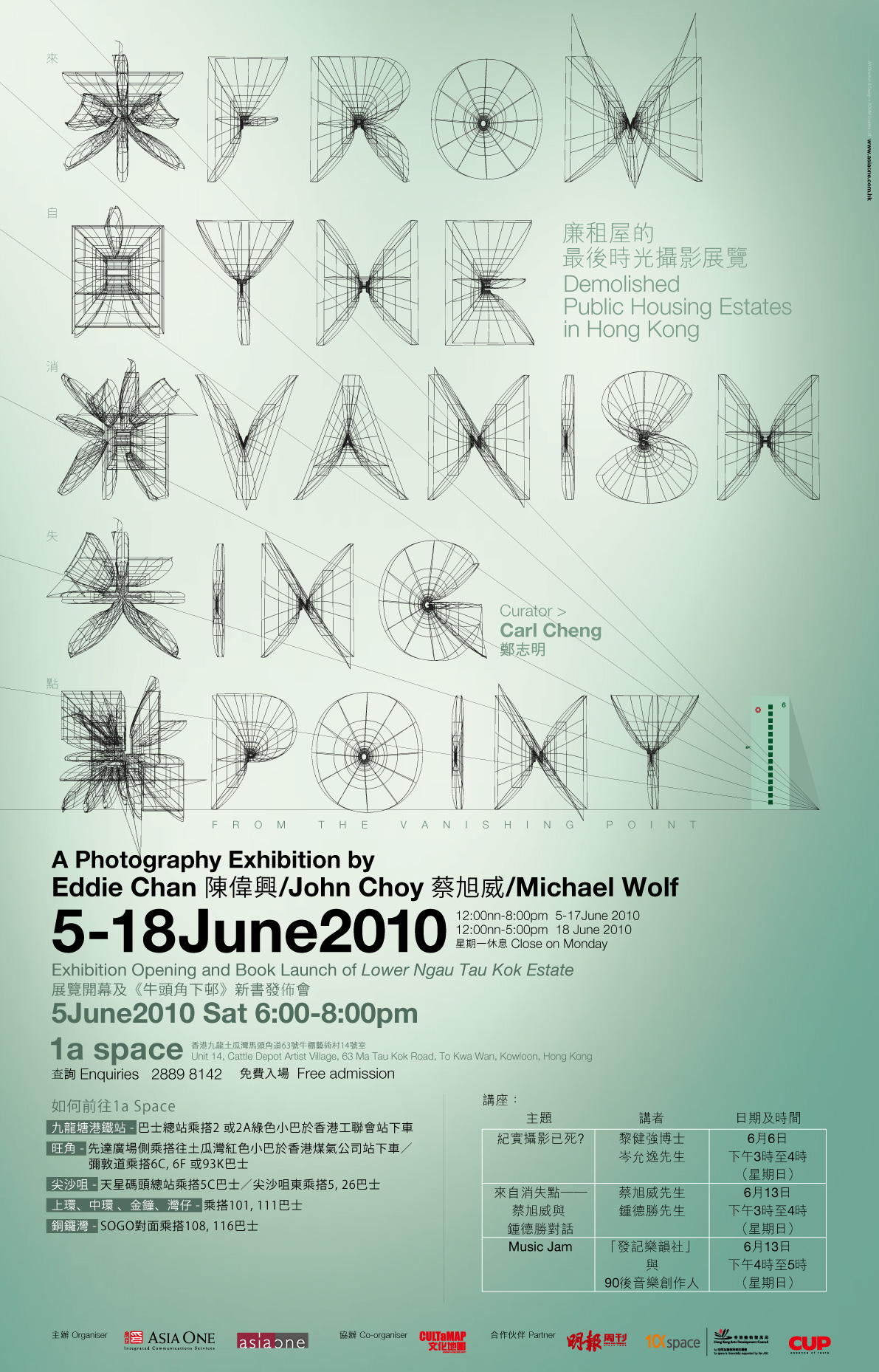
From the Vanishing Point – Demolished Public Housing Estates in Hong Kong is a last lingering look at a disappeared Hong Kong. Eddie Chan’s images gather up fragments of life from where he grew up in Sau Mau Ping; John Choy captured the shops and neighbourhood atmosphere of Lower Ngau Tau Kok Estate in his panoramic photos; Michael Wolf went door-to-door at the Shek Kip Mei Estate to take portraits and family pictures of its residents.
The low-cost housing estates developed by Hong Kong’s then-colonial government once provided affordable accommodation for the ‘grassroots’ of the territory’s society and thousands of new immigrants. Despite the estates’ high density and spartan amenities, they gave families a chance to live in peace; an important factor in stabilising society and fostering economic growth. Life for estate residents was hard, but at least tempered by the concept of home.
But even the cramped, densely packed reality of the city is not immutable. As Hong Kong’s old estates tumble down one-by-one to the wrecking-ball, people flock to preserve them at least in image and memory; perhaps trying to record history, or simply cherishing the old days. The new public housing supplanting the estates offer better conditions in every measurable way – and yet, the community itself has become somehow colder and more alienated.
All three photographers witnessed the process of disappearance as it happened; and now they share the imprint of the experience. Each of them contributes his own version of reality – a fusion of physical surface and form, emotion and memory.
lntk book launch 牛頭角下村新書發佈會
[mappress]
展覽簡介:
空間感,文藝復興以降為人所追求,從建築、繪畫到攝影,空間的幻覺給人真實感。生活在香港,居住空間狹小,廉租屋密度更是極高,居於其中,難以體會空間感,雙眼從來不見消失點。空間,是香港人的幻覺。
廉租屋,是港英政府為基層及新移民家庭提供的簡陋居所,密度高且設施貧乏,但低廉的租金卻讓許多家庭能安居樂業,是穩定社會、促進經濟發展的重要因素。那年代,別無他選,大部份家庭甘之如飴,生活艱難,但心存祈盼。
時移世易,廉租屋亦要清拆重建,香港人蜂擁前往懷緬拍照留念,是為了見證歷史,或是想留住昔日情懷?重建後的新式公共屋邨,生活水平提升,人們獲得空間感的同時,社會卻瀰漫著冷漠與疏離。
攝影的確可以見證歷史,留住所謂的集體回憶,更可反映現實。港人前往懷緬拍照,難道是擔心我們香港人當時的存在價值,會像廉租屋一樣隨經濟發展一併消失嗎?
可惜,活在香港,我們還是不斷製造空間的幻覺,賴此更勝文藝復興大師的創意令許多港人累積財富,而真實卻是更多的人和地方會繼續「被消失」,相機遂成了我們餘悸猶存的伙伴,通過它留下沒法補回的真實影像。
「來自消失點」展示了三位傑出攝影師鏡頭下廉租屋的最後時光:在秀茂坪長大的陳偉興用了三年時間為他的成長地拍下一點點生活片段;蔡旭威嘗試融入社區並以全景攝影手法捕捉牛頭角下邨的街坊店舖情景;來自德國但在香港生活多年的Michael Wolf則逐家逐戶訪問石硤尾邨的住戶並拍下人像/家庭照。
透過照片,留下消失了的地方和人事,彌補了人們善忘的習性;三對眼睛,提出了拍照留念以外的觀點角度。
有
Read more